Food and Sleep: Why Under-Eating Might Be Wrecking Your Rest
You've done everything the sleep articles told you to. Cool room, no screens after nine, magnesium on the nightstand, a wind-down playlist doing its best. And still you're staring at the ceiling at two in the morning, or snapping awake at four for no reason your sleep tracker can explain.
Here's a variable most of that advice leaves out completely: what, and how much, you ate that day.
Food and sleep are wired together far more tightly than the wellness internet lets on, and the wiring runs both ways. Poor sleep changes how your body handles food. And the part that gets almost no airtime, not eating enough, can quietly sabotage your sleep. If you've been under-fueling and pinning your insomnia on stress, this one is for you.
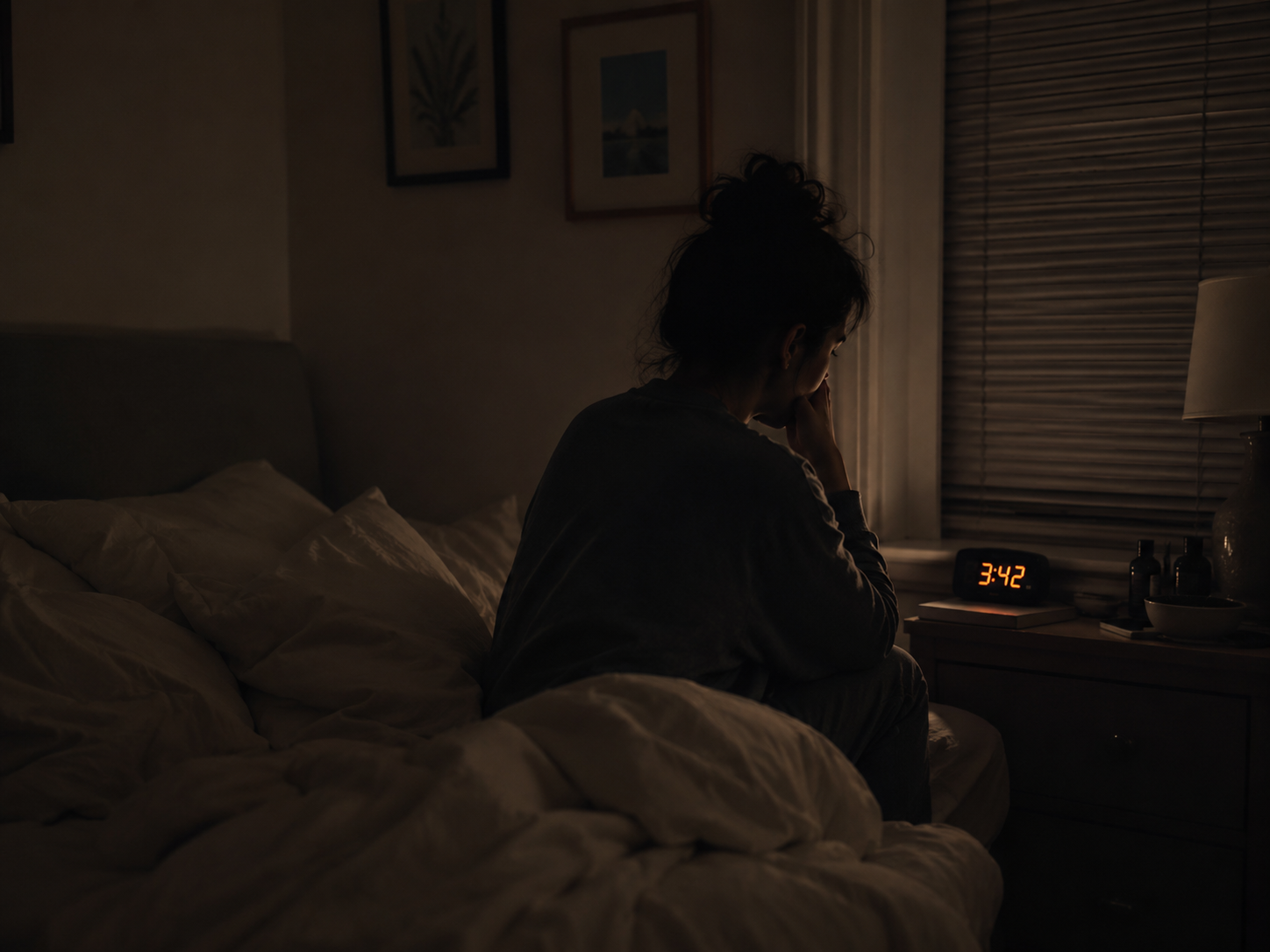
Sleep and food run on the same circuit
It helps to stop picturing sleep and eating as two separate habits and start seeing them as two ends of one system that never stops talking to itself. The hormones that govern hunger and fullness shift across the sleep-wake cycle. The stress chemistry that keeps you alert at night also shapes your appetite the next morning. Cortisol, blood sugar, and the molecules that signal when to eat and when to stop are all part of the same conversation.
Which means you can enter the loop from either side. A rough night bleeds into how you eat tomorrow. An inadequately fueled day bleeds into how you sleep tonight.
What short sleep does to your metabolism
Cutting your sleep short does something measurable to how your body processes food, and it doesn't take weeks. A few nights will do it.
The clearest effect is on blood sugar. In controlled studies, restricting sleep lowers insulin sensitivity and leaves you handling glucose less efficiently, which nudges up diabetes risk over time. Your metabolism, put simply, gets temporarily worse at its job after a bad night, with no change to your diet at all.
Your hunger signals take a hit too. When you're underslept, appetite tends to rise, fullness gets harder to register, and cravings lean toward quick, dense energy. This isn't weakness or a discipline problem. It's a tired brain reaching for the fastest fuel it can find while turning down the volume on the cues.
Poor sleep turns your own hunger and fullness cues into unreliable narrators. If you're trying to eat in tune with your body, a week of poor sleep will scramble the exact signals you're straining to hear.
Under-eating wrecks sleep
Not eating enough is one of the most overlooked causes of poor sleep there is, and it makes complete sense once you look at it through your body's eyes.
Start with the deep evolutionary logic. A well-fed animal can afford to sleep. A hungry one cannot, so it stays alert and keeps scanning for the next meal. That wiring still lives in you. Run a large enough energy deficit and your nervous system reads it as a threat, holding you a notch more switched-on than real rest allows.
Cortisol carries a lot of the mechanism. Chronic under-fueling raises stress hormones, and elevated cortisol at the wrong hour of the night fragments sleep and multiplies your wake-ups.
Then the blood sugar piece, which is the classic one. Go to bed genuinely under-fueled and your blood sugar can drift low overnight. Your body won't just ride that out; it releases adrenaline and cortisol to pull glucose back up, and that hormonal jolt can snap you awake, often wired, anxious, or suddenly ravenous. If you've ever shot upright at 3am with your heart pounding for no clear reason, an empty tank belongs on the suspect list.
Finally, the raw materials. Your brain builds part of its sleep chemistry from your food, using the amino acid tryptophan to make serotonin and then melatonin. Eat too little, especially while cutting carbohydrates hard, and you may be shorting your body the very ingredients it uses to wind down. The human evidence on this last link is still developing, but the biochemistry is well established and worth taking seriously.
Stack it all up and the picture inverts what most people assume. The under-fueled body isn't drifting peacefully into deep sleep. It's standing guard.
Symptoms worth paying attention to
You can't see cortisol or overnight glucose without a lab, but the lived experience of this pattern is pretty recognizable. Some of what tends to show up when food and sleep are tangled:
Lying there exhausted but unable to actually fall asleep
Waking around 3 or 4am, sometimes wired, anxious, or hungry
Sleep that feels shallow and leaves you unrested
Waking up hungry, or lying in bed unable to think about anything but food
The "tired but wired" state: too drained to function, too keyed-up to rest
Daytime fallout like brain fog, a short temper, constant cravings, and workouts that won't recover
No single one of these proves anything. But if several ring true and you've been dieting hard or simply not eating enough, it's very reasonable to suspect the two are linked.
Small shifts that help
Feed yourself enough, and quit treating nighttime eating as a crime.
Eat enough during the day, consistently. For a chronic under-eater, the most effective sleep aid isn't a supplement. It's more food, spread through the day, so you aren't arriving at bedtime with an empty tank and a revved-up stress response.
Don't go to bed hungry. If you're hungry before sleep, eat something. A bedtime snack is not a metabolic sin, and can actually help you settle.
Let carbs back into your evening. The notion that nighttime carbohydrates are dangerous is diet mythology. Including some at dinner supports steadier overnight blood sugar and feeds the tryptophan-to-melatonin pathway your sleep leans on.
And the familiar non-food basics still earn their keep, briefly: hold your sleep and wake times reasonably steady, get daylight early, build in a genuine wind-down, keep an eye on late-afternoon caffeine, and remember that alcohol may knock you out while shredding the back half of your night.
Feeding yourself is a sleep strategy
The loop runs both ways, which is the hopeful part. Under-fuel and sleep suffers, sleep suffers and eating goes sideways, and round it goes. But you can run that same circle forward. Eat enough, and sleep tends to follow. Sleep well, and your hunger signals start telling the truth again.
You don't have to earn sleep by eating less, and you cannot out-discipline a body that's running on empty.
-
Yes. Under-fueling raises cortisol, which fragments sleep, and going to bed under-fueled can send your blood sugar low overnight, triggering a stress-hormone surge that wakes you. The bigger the energy deficit, the more likely it is to disrupt your sleep.
-
There are many possible reasons, but one that's often missed is low overnight blood sugar. If you went to bed under-fueled, your body may release adrenaline and cortisol to raise glucose back up, and that jolt can wake you, often feeling wired, anxious, or hungry.
-
It does, and fairly quickly. Even a few nights of short sleep can lower insulin sensitivity and leave your body handling glucose less efficiently the next day, independent of what you eat.
-
No, despite what diet culture claims. Going to bed hungry is far more likely to disrupt your sleep than a small snack.
-
The opposite tends to be true. Carbohydrate at dinner supports steadier overnight blood sugar and helps supply the tryptophan your brain uses to make serotonin and melatonin. "No carbs at night" is a diet rule, not a sleep strategy.
-
Short sleep tends to increase hunger, make fullness harder to notice, and push cravings toward fast, dense energy. It also makes your hunger and fullness cues less reliable, which is worth knowing if you're trying to eat intuitively.
-
It varies from person to person. Some people notice steadier nights within days of fueling more consistently, while others take a few weeks. If sleep stays broken despite eating enough, it's worth getting individual guidance rather than guessing.
If your sleep has been wrecked and you suspect under-fueling is part of the story, that's exactly the kind of knot a dietitian can help you untangle. Khan RD is in-network with Aetna, Blue Cross Blue Shield, UnitedHealthcare, and Superior HealthPlan.
The content of this blog does not serve as medical advice.