Food Noise and Food Scarcity: Why Dieting Often Causes the Overeating It Promises to Fix
If your brain will not stop thinking about food, I have some news that's either going to be relieving or annoying:
You don't have bad willpower. You're not "addicted to food." You are almost certainly underfed in some way (calories, carbs, frequency, variety, or all four), and your brain is doing exactly what brains are built to do when they sense a shortage. It's getting loud.
This is a conversation that diet culture skips, because the whole industry depends on you believing the noise is your fault.
What "food noise" actually is
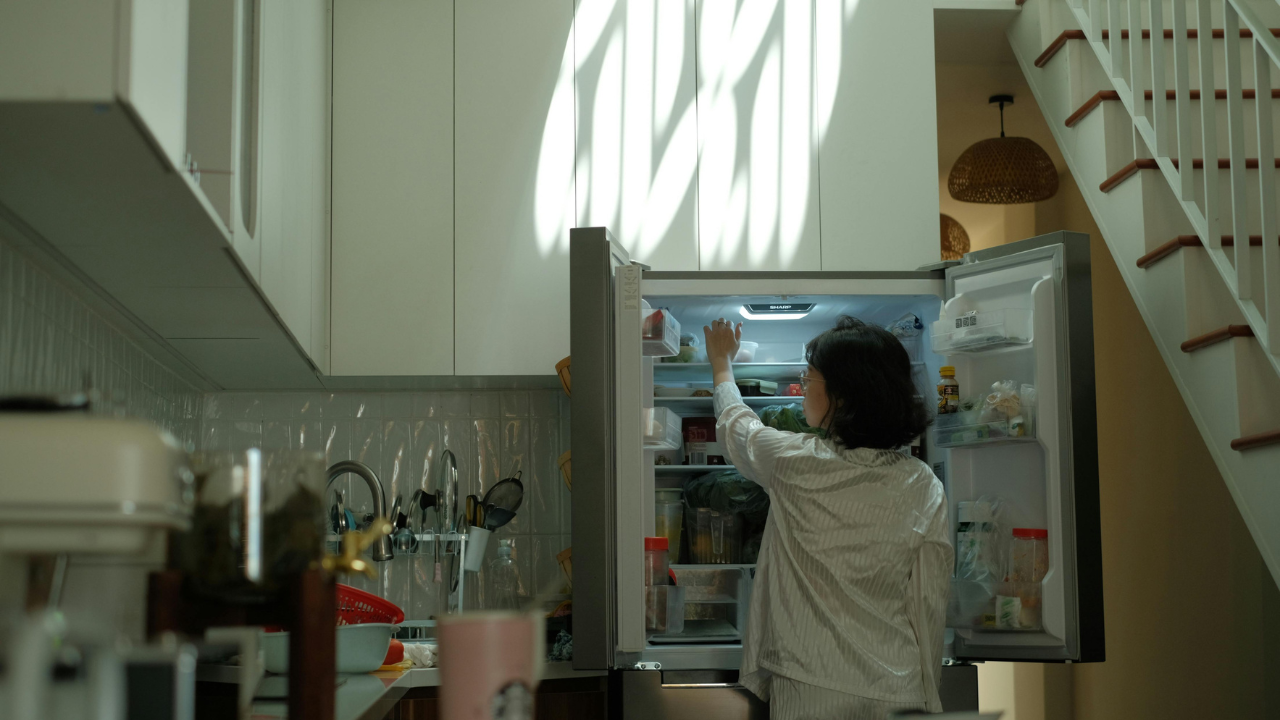
"Food noise" is the background hum of food thoughts that many experience constantly. Thinking about your next meal while you're still eating the current one. Mentally rehearsing what's in the pantry while you're in a meeting. Driving past a restaurant and replaying the menu for the next half hour. Going to bed thinking about breakfast. Waking up already negotiating with lunch.
Food noise isn't necessarily a problem. It's a signal. It's your brain saying, in a thousand small ways, that food has become a higher-priority resource. The real question isn't "how do I make it stop." It's "why is my brain treating food like it's scarce?"
Where food noise comes from
1. Physical scarcity. Not eating enough, not eating often enough, not eating enough carbs, not eating enough variety, skipping meals, "saving calories" for later, fasting windows that don't match your real life, training a lot and not eating to match. Your body doesn't know the difference between intentional restriction and unintentional shortage. It just knows it doesn't have what it needs and starts upregulating the systems that make you find food.
2. Perceived scarcity. This is the psychological side. Your brain doesn't just respond to actual shortage. It responds to the idea of a future shortage. If you tell yourself you can't eat carbs after 7 p.m., or that you have to "be good" tomorrow, or that you're going to start fresh on Monday, your brain processes that rule like a threat. It starts stockpiling. Mentally, behaviorally, and often physically, at the next opportunity.
Both kinds of scarcity produce food noise. Both kinds get worse the longer they continue. And both kinds resolve, predictably, when the brain becomes convinced (through consistent action) that food is reliably available again.
The Minnesota Starvation Experiment, briefly
I'm not going to do the whole history lecture, but this study deserves a quick mention because almost everyone who has been on a long diet has lived through a smaller version of it without knowing.
In the 1940s, researcher Ancel Keys studied what happened when healthy young men were put on a sustained, semi-starvation diet (roughly half their usual intake) for several months. These were psychologically screened, stable, motivated volunteers. Within weeks, every single one of them developed symptoms we now recognize as classic features of eating disorders and chronic underfeeding:
Obsessive thoughts about food
Hoarding food, reading cookbooks, collecting recipes
Slowed metabolism
Irritability and depression
Social withdrawal
Reduced libido
Loss of interest in things that used to matter
And in the refeeding phase, a strong tendency toward binge eating that lasted for months
Essentially, chronic underfeeding produces obsessive food thoughts and binge behaviors on purpose, every single time. It's not a moral dilemma.
How dieting creates the exact pattern it promises to fix
Most people come to me having been told, in one form or another, that they're "an emotional eater," "a binge eater," or "addicted to sugar." What they almost always actually are is someone caught in the second half of a restrict-binge cycle.
The cycle looks like this:
Decide to start a new diet, food rule, or “cut something out” (or some other form of restriction).
Eat less, often noticeably less, for a stretch of time.
Brain gets quietly louder. Food noise increases. Mood drops. Sleep gets weird.
At some point, hit a wall. Tired day, stressful week, social event, a glass of wine, a single snack that "ruined it anyway."
Eat past fullness, often on the foods you were avoiding.
Feel guilty. Promise to be better tomorrow.
Restart the plan, often stricter.
People look at step 5 and say "I have a problem with overeating." What you actually have is a problem with steps 1 through 4. Step 5 is your body's correction.
Restriction reliably produces overeating in humans. It's one of the most replicated findings in eating behavior research. Telling someone to "just stop binging" while they're still under-eating is like telling someone not to breath right after they’ve emerged from underwater.
Why this looks like a willpower problem and isn't
A few reasons the "willpower" framing sticks even when it's wrong:
The overeating part is visible. The underfeeding part is invisible. People see the binge and not the restriction that preceded it by hours, days, or weeks.
Restriction is socially praised, especially in Austin. So nobody flags it as the actual problem.
The relief of finally eating after restriction does feel out of control, because your body has been over-riding your top-down rules. That feels like a personal failing even when it's physiological.
Diet culture has a strong financial incentive to keep the problem framed as you, not the diet.
Many people have been told for years that they have "no self-control around food."
Willpower is fine as a concept. It's just being asked to do a job it was never designed to do, against a biology that doesn't care about your goals.
Your body has quite literally evolved to NOT starve!
What actually quiets food noise
The unsatisfying, durable answer: regular, sufficient, varied eating, for long enough that your brain believes you.
In practice that usually looks like:
Eating at consistent intervals through the day, usually three meals and snacks.
Eating enough at meals to physically and emotionally satisfy you.
Including the foods you've been avoiding, in your normal life, until they stop feeling special.
Most people see food noise begin to quiet within a few weeks of consistent, adequate eating. Food becoming just one of many things you think about during the day, usually takes a few months. Sometimes longer if there's a long dieting history.
A note on GLP-1s, because someone's going to ask
GLP-1 medications (Ozempic, Wegovy, Mounjaro, Zepbound) suppress appetite and reduce food noise, which is part of why they've taken off. I'm not anti-GLP-1 in the right medical context. I am cautious about them, especially in anyone with an eating disorder history, because "less food noise" is not always a clinical win when the noise was actually a hunger signal in disguise.
There's a lot more to say about this (and I will get around to it). For now, the short version: a medication that turns down food noise in someone who's already under-fed is solving the wrong problem.
-
"Food noise" isn't a formal diagnosis, but it describes a real, well-documented phenomenon: chronic, intrusive food preoccupation, which is one of the most consistent findings in research on dieting, underfeeding, and eating disorders.
-
In the context of adequate and consistent intake, yes, food noise can quiet down dramatically. Food becomes something you think about when you're hungry, planning, or enjoying a meal, and not much in between. The timeline depends on how long the dieting or underfeeding pattern has been running.
-
Yes. Volume isn't the only trigger. You can eat an adequate amount of food and still experience food noise if your eating is infrequent, low in carbs, low in variety, or built around "I'll be good tomorrow" thinking. Your brain is responding to the pattern, not just the calorie total.
-
Two reasons, usually. First, most people under-eat earlier in the day (skipped breakfast, light lunch, "saving room") and your body responds to that deficit later on. Second, the stress, structure, and distraction of the day are gone, so the food signal that was always there finally gets the floor. Increasing intake earlier in the day is one of the most reliable ways to address this.
-
No. Food noise is a symptom that shows up in lots of contexts, including chronic dieting, RED-S, ADHD, anxiety, and eating disorders. Binge eating disorder is a specific clinical diagnosis with its own criteria. Many people with BED experience intense food noise, but not everyone with food noise has BED.
-
It can. ADHD affects appetite regulation, interoception (your ability to read internal body signals), stimulant medication timing, and the executive function it takes to eat consistently. A lot of ADHD adults end up under-eating during the day and then dealing with loud food thoughts at night.
-
This is the fear most people land on, and the short answer is no, although it can feel that way for the first week or two. When the body has been told for months or years that food is scarce, the first stretch of consistent, adequate eating can feel chaotic. The pattern reliably settles. Most people land in a much calmer place with food within a few weeks once their brain stops bracing for the next round of restriction.
At Khan RD, we work with those who are under-fueled, the chronically dieting, the binge-restrict-cycle-tired, and everyone in between. HAES-aligned, Intuitive Eating based, and in-network with Aetna, BCBS, and UnitedHealthcare. In person in Austin, virtual across Texas.
The content of this blog does not serve as medical advice.