Food Safety Without the Fear: What Actually Prevents Food-borne Illness
There's a parasite in the news, and suddenly your salad looks like a threat.
If you've spent the past week eyeing your lettuce with suspicion, you're not being dramatic. Headlines about an "explosive diarrhea" parasite will do that to a person. But here's the thing worth holding onto before you throw out your produce drawer: real food safety is a short list of boring habits, and almost nothing that scares people is on it.
Let me sort the useful from the anxious.
The four rules that do most of the work
Federal food safety guidance basically comes down to four words. Clean, separate, cook, chill. Extremely effective.
Clean. Wash your hands with soap for twenty seconds before and after handling food, especially raw meat, poultry, eggs, and seafood. Wash your cutting boards and counters too. This one habit prevents more illness than any supplement, filter, or fancy produce wash ever will.
Separate. Keep raw meat and its juices away from anything you plan to eat raw. A different cutting board for the chicken than for the salad. That's all cross-contamination means: the raw thing touched the thing you weren't going to cook.
Cook. Heat kills the overwhelming majority of foodborne bugs. A cheap meat thermometer is the most underrated tool in an American kitchen. 165°F for poultry, 160°F for ground meat, 145°F for whole cuts and fish with a short rest. Color can be a good indicator, but temperature always tells the truth.
Chill. Bacteria multiply fastest between about 40 and 140°F, a range known as the danger zone. In a Texas summer, a tray of food left out after a cookout is basically a bacterial daycare. Refrigerate leftovers within two hours, and within one if it's above 90 degrees outside, which around here is most of the summer.
Why washing produce isn't the hero you think
Washing your fruits and vegetables is a good habit. It just isn't a force field.
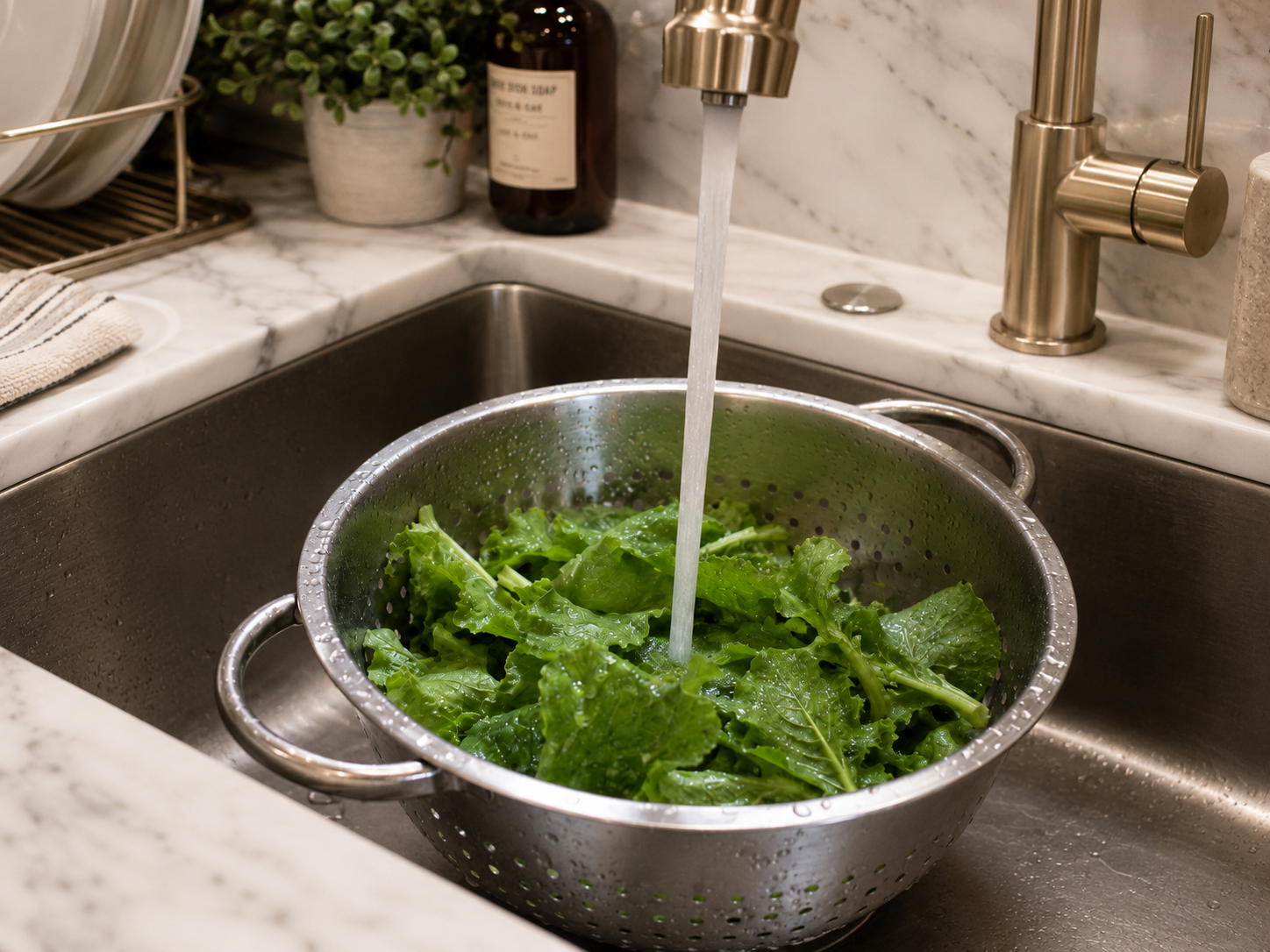
Rinsing under running water knocks off dirt and lowers the amount of surface germs. But it doesn't sterilize anything, and for some bugs it barely helps at all. The parasite in the current headlines is a good example: it clings to produce so stubbornly that even careful washing doesn't reliably remove it. Skip the soap and the commercial veggie sprays while you're at it. Plain running water is the recommendation, and soap can leave residue that upsets your stomach on its own.
Washing lowers risk. It doesn't erase it. Those are two different promises, and cooking is the only one of them that keeps.
About that parasite in the news (Cylospora):
The bug is cyclospora, a microscopic parasite, and the illness it causes is cyclosporiasis. As of mid-July 2026, more than 4,000 cases have been reported across 31 states, with Michigan and Ohio hit hardest and Texas among the states seeing a jump. It causes watery, sometimes explosive diarrhea along with cramping and bloating, and the misery can drag on for weeks even though it rarely turns dangerous. Investigators suspect lettuce or salad greens but haven't confirmed a source. TODAY.com + 5
Two practical takeaways, then we move on. First, it spreads through contaminated food or water, not person to person, so this isn't something you catch from a sick coworker. Second, if you have diarrhea that won't quit after a couple of days, see a doctor and specifically ask about cyclospora, because it needs a particular antibiotic and doesn't always show up on standard stool tests. Good news for your kitchen: cooking produce to 158°F or higher kills it outright. CNBC + 2
When food safety tips into food fear:
There's a real difference between food safety and food fear, and outbreaks blur the line. Food safety is behavioral. Wash, separate, cook, chill, and pay a little extra attention during a specific, time-limited outbreak. Food fear is something else. It's the creeping sense that food itself is out to get you, that you have to inspect, sanitize, or eliminate your way to feeling okay.
I know where that road goes, because I work with people living on it. For some, contamination fear is a genuine driver of ARFID, or avoidant/restrictive food intake disorder, where anxiety about getting sick slowly shrinks the list of foods that feel safe until eating becomes hard. Outbreak headlines pour gasoline on exactly that.
If your response to a scary news story is a calm "I'll wash my greens and cook my chicken," great. That's the system working. If your response is weeks of avoiding whole categories of food, re-rinsing things you already rinsed, or bracing for panic at a restaurant, then we should talk.
Being careful protects you. Being afraid mostly just costs you.
-
No. Rinsing under running water reduces dirt and surface contamination, but it doesn't sterilize produce, and some parasites and bacteria stick well enough that washing barely dents them. Cooking is the only reliable kill step. Wash anyway, just don't treat it as a guarantee.
-
Cyclospora is a microscopic parasite that causes cyclosporiasis, an intestinal illness with watery diarrhea, cramping, and bloating that can last weeks. You get it from food or water contaminated with the parasite, most often fresh produce. It does not spread person to person.
-
Safe minimum internal temperatures are 165°F for poultry, 160°F for ground meat, and 145°F for whole cuts of meat and fish with a rest. For the current cyclospora parasite specifically, heating produce to 158°F or higher kills it. A cheap food thermometer is the only way to know for sure.
-
No. Health authorities recommend plain running water. Soap and commercial produce washes aren't necessary, aren't proven to work better, and can leave residue that causes its own stomach upset.
-
No more than two hours at room temperature, and no more than one hour if it's above 90°F outside. Bacteria multiply fastest between 40 and 140°F, the so-called danger zone, which a Texas summer hits easily.
-
For most people, yes, with normal precautions. During an active outbreak it's reasonable to prefer whole heads over pre-bagged mixes, discard the outer leaves, and rinse well. If eliminating a whole food group feels like the only way to relax, that's a sign the worry has outgrown the risk.
-
When it stops being a habit and starts running your life. Avoiding broad categories of food, ritual re-washing, or panic around eating out can point to anxiety or ARFID rather than caution. That's treatable, and worth real support.
If food itself has started to feel dangerous, if the worry is running your kitchen instead of the other way around, that's worth a real conversation. You don't have to wait until eating feels impossible to get help making food feel safe again. Khan RD is in-network with Aetna, Blue Cross Blue Shield, UnitedHealthcare, and Superior HealthPlan.
The content of this blog does not serve as medical advice.