Why Calorie and Macro Counting Doesn't Hold Up
If you've ever logged a meal, scanned a barcode, weighed a banana, and felt vaguely defeated by the whole process, that's a pretty reasonable reaction. Calorie and macro counting feel like they should be the most scientific, most precise, most "by the numbers" approach to eating.
They're not.
The numbers in your app are an approximation built on top of an approximation, applied to a body that doesn't read labels. The math doesn't fail because you did it wrong. The math fails because it was never as precise as it looked.
Let’s look at what’s actually going on.
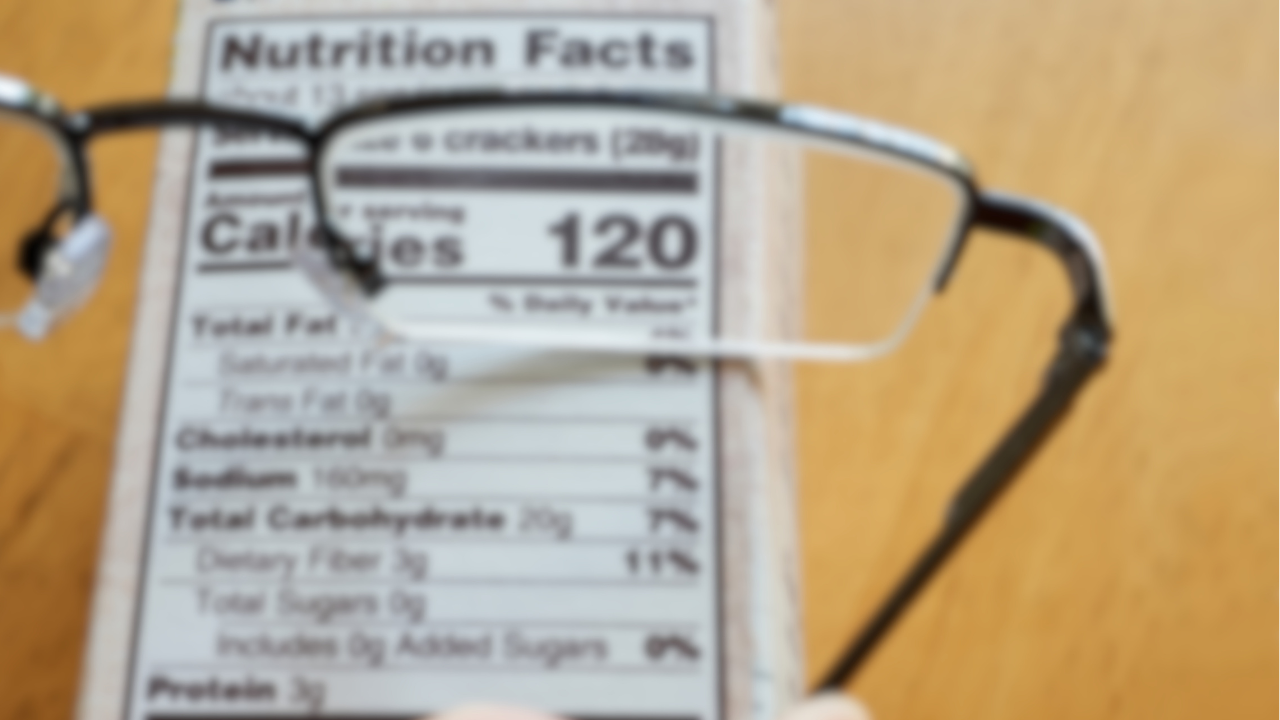
Where calorie labels come from in the first place
The system most nutrition labels use is built on the Atwater factors, developed by an American chemist named Wilbur Atwater in the late 1800s. He measured how much heat was released when food was burned in a sealed chamber called a bomb calorimeter, calculated average energy values per gram for carbs, protein, fat, and alcohol, and the rest of us have been using those numbers ever since.
The round numbers most people memorize:
Carbs: 4 calories per gram
Protein: 4 calories per gram
Fat: 9 calories per gram
These are averages. They were never meant to describe what a specific human body does with a specific food in a specific meal on a specific day. They were meant to give a rough population-level estimate. The food industry adopted them because they're cheap, scalable, and easy to slap on a package.
And in the United States, the FDA permits a margin of error of up to 20% on nutrition labels. That bag of trail mix labeled 200 calories is legally allowed to be 160 or 240. Restaurants and chain menu items are often further off than that.
So your tracking app, before your body even enters the picture, is built on labels that are conservatively estimated to be 20% off.
Now let’s add your body to the picture
This is where the math gets even shakier.
A few things happen between the label and your bloodstream:
Bioavailability isn't a flat number. Different foods deliver different amounts of usable energy, even when they "contain" the same calories on paper. A 2012 USDA study found that whole almonds deliver about 129 calories per ounce in real human absorption, not the labeled 170. Why? The intact cell walls trap some of the fat and pass it through undigested. Grind that same ounce into almond butter and absorption jumps significantly.
Cooking changes everything. Cooked food can change calorie availability. A raw sweet potato and a roasted sweet potato of identical weight don't deliver identical energy.
Your gut is its own ecosystem. Two people can eat the same meal and absorb meaningfully different amounts of energy from it, depending on their gut microbiome composition, transit time, enzyme production, and other variables.
The thermic effect of food. Different foods cost your body different amounts of energy to digest.
Food matrix matters. The food matrix, meaning how the nutrients are physically held together in the food, changes how much you absorb and how fast.
Add this all up and you’ll very quickly realize that the number on the screen is doing a lot more pretending than people realize.
The point is that the precision implied by counting is just not indicative of how the system actually works.
Calorie and macro counting are also one of the most consistent predictors of disordered eating patterns in research, and one of the most common things I see in my office.
The pattern usually goes:
Someone starts counting to "be more aware" or attempt to control their weight.
The numbers become a structure that feels reassuring.
The structure starts to harden. Foods get scored. Days become judged.
Skipping food becomes a win. Eating "over" becomes a loss.
Social eating gets stressful. Restaurants get stressful. Hunger gets reframed as a number, not a signal.
The relationship with food narrows.
Not everyone who counts ends up here. But a sizable percentage do, and most of them didn't see it coming.
There's a real body of research linking long-term tracking to higher rates of orthorexia, binge eating, body dissatisfaction, and clinical eating disorders. This doesn't mean tracking is automatically harmful for every person in every situation. It means the risk profile is real, and worth taking seriously, especially in populations already vulnerable to disordered patterns: perfectionists, athletes, anxious people, and anyone with a history of dieting.
The sustainability problem
Even setting aside the disordered eating risk, calorie counting doesn't hold up over years. Almost nobody can keep tracking forever. The few who do are usually paying a real cost in mental energy, social flexibility, and joy around food.
Short-term tracking can help in specific clinical cases, but I cannot stress enough how it is a short-term tool:
A person with type 1 diabetes counting carbs to dose insulin
A renal patient limiting potassium or phosphorus
An athlete briefly checking total intake to avoid under-fueling
A clinician reviewing a few days of food logs to spot a pattern
These are brief, defined clinical uses.
What works instead
The unsexy, durable answer:
Eating regular, sufficient meals and snacks with structure that suits your life.
Including carbs, protein, fat, and fiber at most meals, without weighing them.
Eating to comfortable fullness, not to a target.
Working with a dietitian if your food is taking up too much mental space, or if you have a specific clinical situation that needs nuance.
This is slower than tracking. It doesn't generate the dopamine of a daily green checkmark in an app. It also works for the rest of your life, which most tracking systems don't.
-
For specific clinical situations (diabetes, renal nutrition, short-term assessment, certain athletic auditing) tracking can be a legitimate tool. The issue isn't tracking itself. It's the casual, long-term, weight-loss-driven version that the wellness industry sells as "just being aware.”
-
Often less accurate than packaged-food labels. Studies looking at chain restaurant menu accuracy have found errors ranging from minor to dramatic, sometimes 100% off in either direction.
-
The database is crowdsourced, which means many entries are user-submitted and unverified. Even the "verified" entries inherit the FDA's 20% label tolerance. The app is precise to two decimal places about numbers that don't have that kind of precision underneath them.
-
No. Intuitive eating encourages "honoring your health with gentle nutrition." It uses internal cues like hunger and fullness as primary signals, but it doesn't ignore nutrition science.
At Khan RD, we work with people moving away from tracking, people who never tracked and just want a sane plan, and people with specific clinical situations where the numbers actually matter. HAES-aligned, non-shaming, in-network with Aetna, BCBS, and UnitedHealthcare.
The content of this blog does not serve as medical advice.